Becky9 Dry Glove Tools
This is a bit of work in progress, please bear with me
Background
I've been using the Kubi Dry Glove system for a long time now, I do think its the best dry glove system out there. For a long time I used the standard black marigold gloves, having tried various other glove systems I always returned to the standard G17K marigolds. I'd tried the popular Showa 'Blue Smurf' gloves for fit but never tried to dive with them as I felt they lacked the dexterity of the Standard Marigold gloves. Whilst I did know of the the issues with fitting cotton lined Showa gloves to the Kubi system, I also knew there was a way to fit them albeit it wasn't entirely straight forward.
Fast forwarding around 5 years a good friend was changing his suit and asked about the Kubi System. I heartily recommended it to him but he had been using Showa gloves on his previous system. I knew it could be done, but hadn't really tried it myself, so I set about finding an easy solution to fit them. There was a video on youtube someone had made with a guide how to fit Showas to 'Diving Concept' dry glove system, this used a section of waste pipe with a split down the side. At the time I had 80mm Kubi Rings and knew the getting the right size pipe was going to be tough. The method also looked like it needed a fair bit of physical strength in the hands to make it work. I simply thought that was going to be frustrating for me so set about makine it work so there wasn't a need for strength or particular technique.
I sought far and wide for something suitable to modify, I bought various food containers and could often be found in supermarkets with a set of calipers or ruler measuring various items on the shelf looking for just the right size object! Once found, I would then cut, slice and turn it into something that worked more or less. The final item I settled on can be seen on my youtube channel here and also in the demo video below.
I've been using the Kubi Dry Glove system for a long time now, I do think its the best dry glove system out there. For a long time I used the standard black marigold gloves, having tried various other glove systems I always returned to the standard G17K marigolds. I'd tried the popular Showa 'Blue Smurf' gloves for fit but never tried to dive with them as I felt they lacked the dexterity of the Standard Marigold gloves. Whilst I did know of the the issues with fitting cotton lined Showa gloves to the Kubi system, I also knew there was a way to fit them albeit it wasn't entirely straight forward.
Fast forwarding around 5 years a good friend was changing his suit and asked about the Kubi System. I heartily recommended it to him but he had been using Showa gloves on his previous system. I knew it could be done, but hadn't really tried it myself, so I set about finding an easy solution to fit them. There was a video on youtube someone had made with a guide how to fit Showas to 'Diving Concept' dry glove system, this used a section of waste pipe with a split down the side. At the time I had 80mm Kubi Rings and knew the getting the right size pipe was going to be tough. The method also looked like it needed a fair bit of physical strength in the hands to make it work. I simply thought that was going to be frustrating for me so set about makine it work so there wasn't a need for strength or particular technique.
I sought far and wide for something suitable to modify, I bought various food containers and could often be found in supermarkets with a set of calipers or ruler measuring various items on the shelf looking for just the right size object! Once found, I would then cut, slice and turn it into something that worked more or less. The final item I settled on can be seen on my youtube channel here and also in the demo video below.
Fast forward a little further and Santi introduced their 'Smart Glove' System. Whilst a flexible ring of sorts this used a similar mechanic to the Kubi system with regards glove fitting. This seemed to present the same issue with cotton lined gloves, so I set about finding a soution to fit to that system too after I decided to have them fitted to my new suit (standard fitting on the Elite+ Suit) . We had visited the Santi Factory in Gydnia when we ordered our suits and Aleks there demonstrated you could fit the gloves to the system without a tool. Whilst this did impress me, I wasn't entirely convinced it was going to work that well and seemed to rely a lot on faith rather than absolute mechanics, however it may work fine for you, mileage does vary so the video demonstrating this method is available below if you wish to try.
The Kubi Tool Ring worked quite well although it was only size for 80mm Kubi Rings and it wasn't easy to make and still required a little bit of technique to use. With the Santi Gloves I ended up using a Thermos Flask to make the ToolRing, being a much larger Glove Ring it was even harder for me to use and making the Tool ring itself was even harder than the Kubi one. I gave away Rings I'd made to a few friends but wasn't entirely happy that this was an ideal solution in that there was still signficant technique required to use... for myself too , changing gloves is not something you do very often and having to relearn how to change gloves when needed could be frustrating , a moving boat isn't fun!
The Kubi Tool Ring worked quite well although it was only size for 80mm Kubi Rings and it wasn't easy to make and still required a little bit of technique to use. With the Santi Gloves I ended up using a Thermos Flask to make the ToolRing, being a much larger Glove Ring it was even harder for me to use and making the Tool ring itself was even harder than the Kubi one. I gave away Rings I'd made to a few friends but wasn't entirely happy that this was an ideal solution in that there was still signficant technique required to use... for myself too , changing gloves is not something you do very often and having to relearn how to change gloves when needed could be frustrating , a moving boat isn't fun!
3D Printer
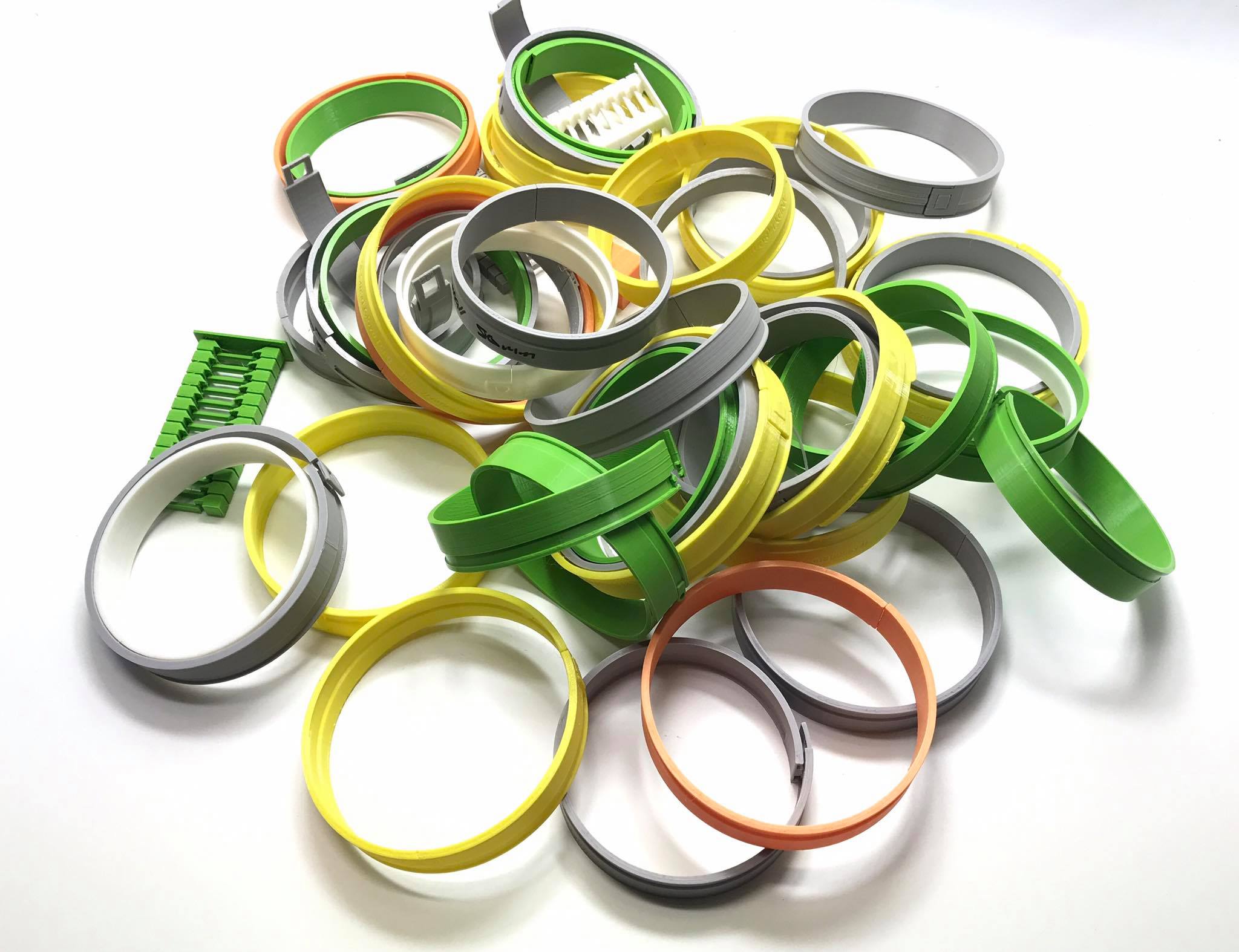
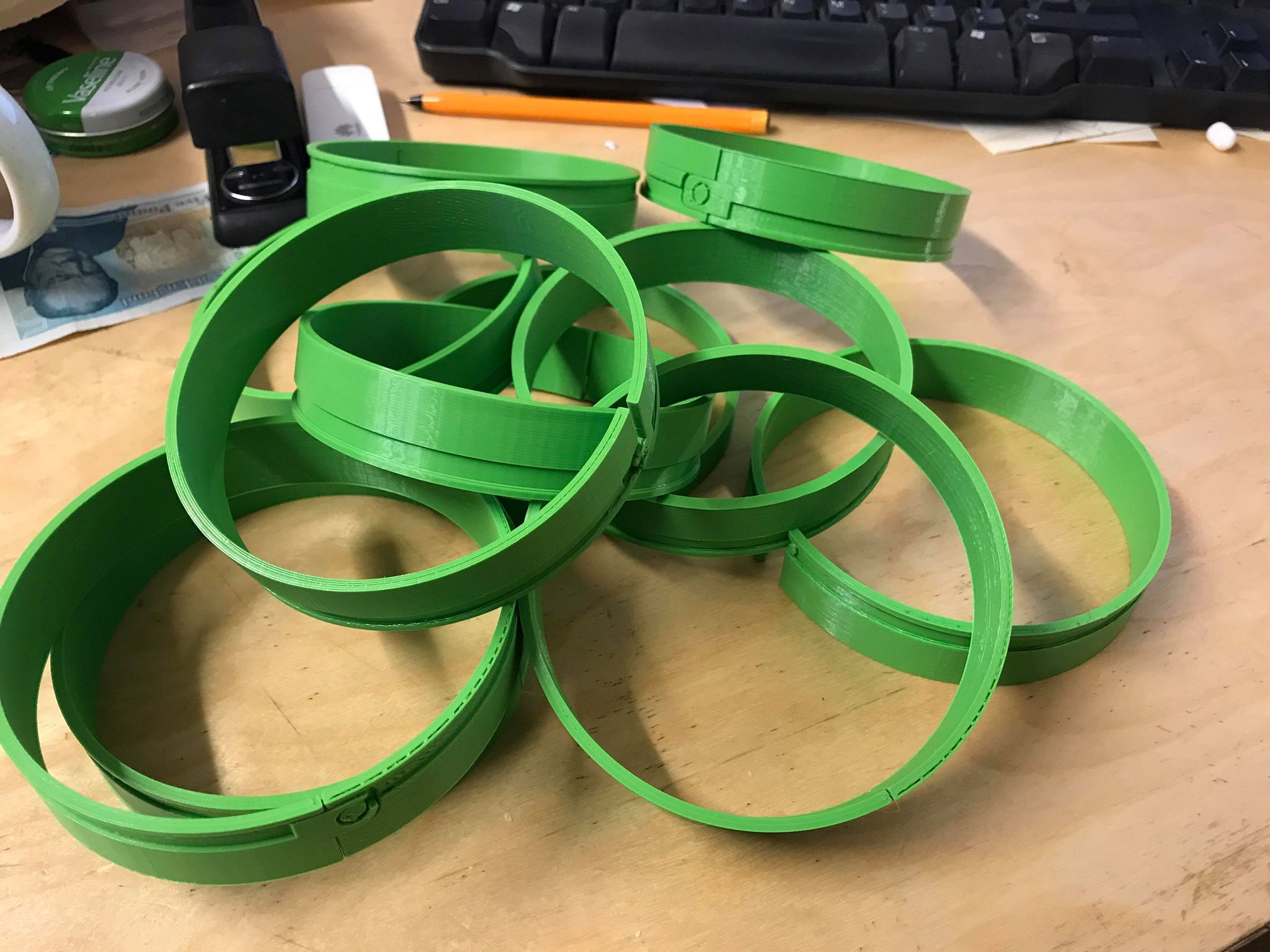
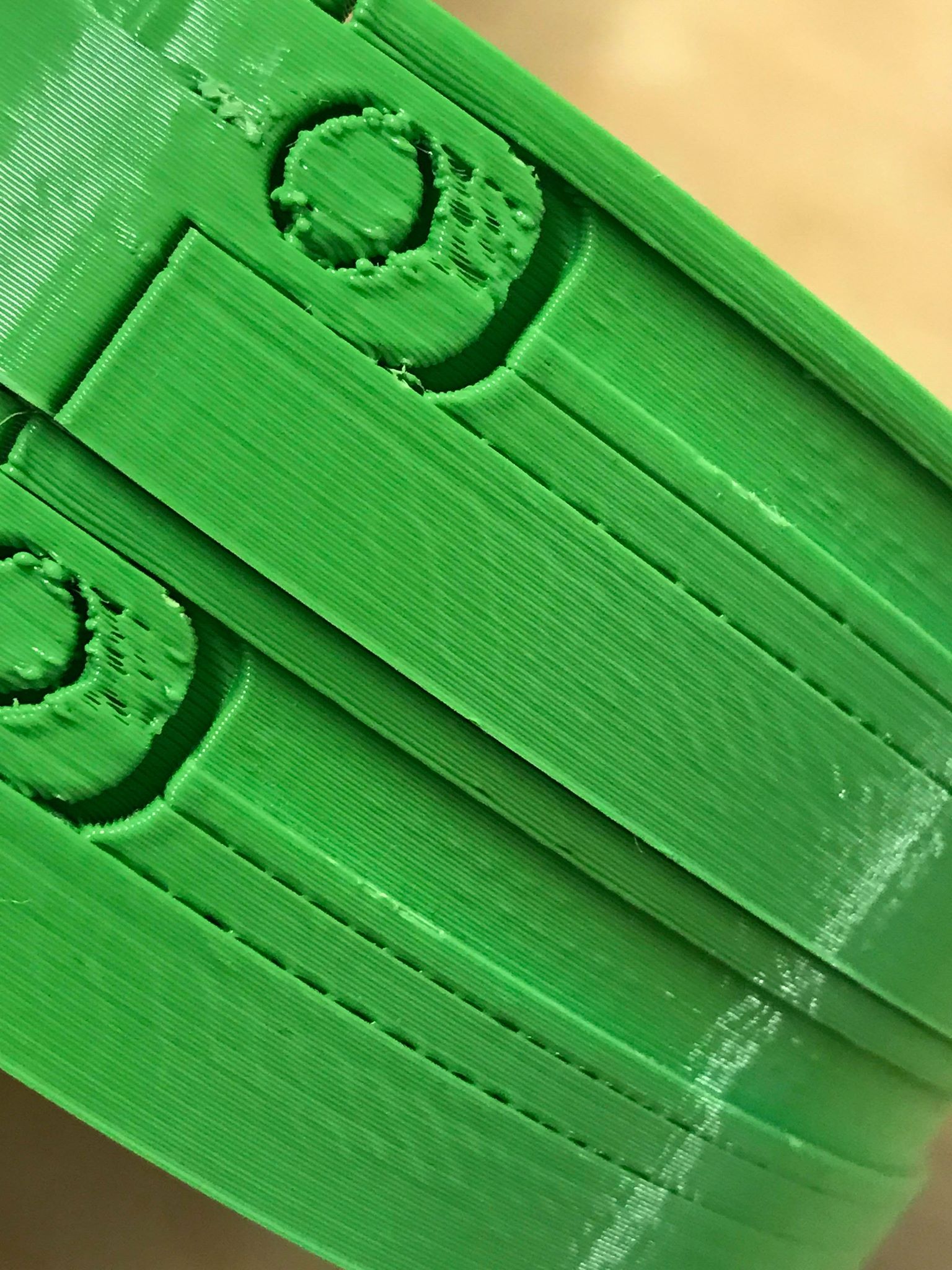
I've always like to create things, so a 3D printer seemed like fun. I thought about getting one for a long time before I finally plucked up the courage to get one. I wasn't sure if the materials you'd print with would be strong or flexible enough to make the Tool Rings works, so in some respects I was quite apprehensive. Once I did get one, I was hooked. It did take quite a long time for me to get to this new technology and even longer to get my own design to work. I think I must have gone through hundreds and hundreds of prototype prints tkaing many hours. Some of this was design VS 3D printing technology but also actually getting the printer to work consistently - take a look at the pics, just some of my test prints!
Printing the Rings allowed a lot of flexibility, careful design meant I could easily change the dimensions to cater for different size glove rings and also for different glove systems. Both the Santi and Kubi Tools are both based on the same design with some tweaks.
Printing the Rings allowed a lot of flexibility, careful design meant I could easily change the dimensions to cater for different size glove rings and also for different glove systems. Both the Santi and Kubi Tools are both based on the same design with some tweaks.
Fitting Showa 660s to Kubi Glove Rings Using the original Plastic Ring made by cutting up a plastic food container.
Fitting Showa 660s to Santi Smart Glove Rings Using 3D printed Tool Ring (Becky9 Method).
.
Some Useful Information On Showa Glove Types and Sizing, very useful to understand relative sizing.
The Santi Method Show to Us by Aleks at Santi (Santi Method)
New - Download STL
These are the STL files, I do have a 100mm version on the Kubi rings, but I haven’t tested it.
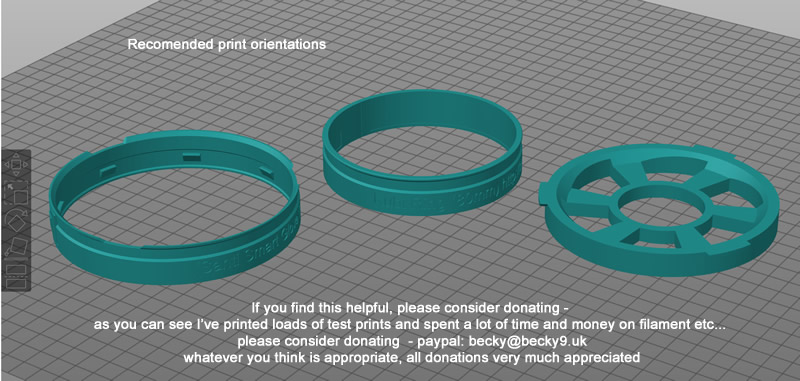
All files should be printed flat to the bed, they may need to be rotated 90degrees in the slicer if they are standing upright. In Cura Combing should be disabled.
I use PETG and it works well, its has the right amount of flex, I have tried PLA but I find its too brittle and can crack when pulling the collapsed ring out of the glove. I have not tried other materials yet.
The catch on the rings are a ‘live’ catch and are printed in place closed, depending on tolerances there may be some sticking and a little teasing with a craft knife to separate the catch.
There are two Santi files. The ‘Santi-StiffenerInsert-petg-printwithsupports' is a stiffener ring that can be inserted into the main ring to stiffen it whilst putting the ring inside the glove, once the ring is in, it should be removed. Whilst its not necessary, it does help a lot fitting the ring into the gloves and is recommended. Currently there is no video showing the use of the stiffener ring, I will do that at some point. The people who have tried the Ring and then tried with the stiffener say it helps a lot.
There is still a certain ‘knack’ to using the tool, you might need to sit there to for a while to get your head around it. It does work, just may need to persevere a little.
No warranty is given nor implied with these files, print them at your own risk.
The catch on the rings are a ‘live’ catch and are printed in place closed, depending on tolerances there may be some sticking and a little teasing with a craft knife to separate the catch.
There are two Santi files. The ‘Santi-StiffenerInsert-petg-printwithsupports' is a stiffener ring that can be inserted into the main ring to stiffen it whilst putting the ring inside the glove, once the ring is in, it should be removed. Whilst its not necessary, it does help a lot fitting the ring into the gloves and is recommended. Currently there is no video showing the use of the stiffener ring, I will do that at some point. The people who have tried the Ring and then tried with the stiffener say it helps a lot.
There is still a certain ‘knack’ to using the tool, you might need to sit there to for a while to get your head around it. It does work, just may need to persevere a little.
No warranty is given nor implied with these files, print them at your own risk.